
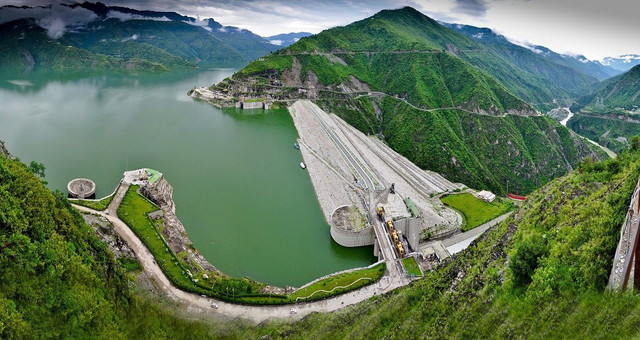
Theri Dam
With a height of 260.5 m (855 ft), Tehri Dam is the tallest dam in India. It is currently ranked No 10 on the List of Tallest Dams in the world. With a total planned installed capacity of 2400 MW, it’s the biggest Hydroelectric power plant in India. It is a multi-purpose rock and earth-fill embankment dam on the Bhagirathi River in New Tehri, Tehri Garhwal district in Uttarakhand, India. It is the primary dam of the THDC India Ltd. and the Tehri hydroelectric complex. Phase 1 was completed in 2006. The Tehri Dam withholds a reservoir for irrigation, municipal water supply and the generation of 1,000 megawatts (1,300,000 hp) of hydroelectricity. The dam’s 1,000 MW variable-speed pumped-storage scheme is currently under construction with expected commissioning in 2025.
A preliminary investigation for the Tehri Dam Project was completed in 1961 under Jawahar lal Nehru’s ministry and its design was completed in 1972 with a 600 MW capacity power plant based on the study. Construction began in 1978 after feasibility studies but was delayed due to financial, environmental and social impacts.
In 1986, technical and financial assistance was provided by the USSR, but this was interrupted years later with political instability. India was forced to take control of the project and at the first, it was placed under the direction of the Irrigation Department of Uttar Pradesh. However, in 1988 the Tehri Hydro Development Corporation was formed to manage the dam and 75% of the funding would be provided by the federal government, 25% by the state. Uttar Pradesh would finance the entire irrigation portion of the project.